


Princeton Will Not Adopt BDS-Inspired Measure After Controversial Referendum
Error: Contact form not found.

 by Algemeiner Staff

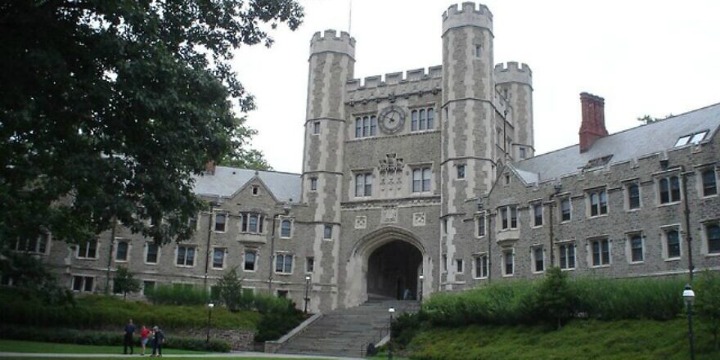
Princeton University in New Jersey. Photo: Yakinodi / Flickr
After a contentious referendum at Princeton University, the administration has affirmed it will not heed a call to boycott the Caterpillar Inc. construction company over its business with Israel.
Following a campus-wide vote, the Undergraduate Student Government (USG) on Wednesday upheld an appeal by opponents of the measure, even as the body ruled it had technically passed. Students opposed to the referendum, which was inspired by the boycott, divestment, sanctions (BDS) campaign against Israel, argued that the process was marred by inconsistent guidance from election officials about the status of “abstain” votes.
As a result, the USG explained last week, it would not support or oppose the measure before the university on behalf of students, as would be typical after a referendum.
On Friday, according to the Daily Princetonian student newspaper, university president Christopher L. Eisgruber confirmed the school will not implement a boycott of Caterpillar machinery.
Pointing to university guidelines, Eisgruber noted that “considerable, thoughtful, and sustained campus interest” in favor of taking a political position over its investments is a prerequisite.
“There is quite obviously no consensus on campus or in the broader University community about issues of Middle Eastern politics or what to do about them,” he said in an email to USG officials.
Such decisions are decided by the Board of Trustees, he emphasized, not the USG or the administration.
“Arguments about who is in the majority, or which side ‘won’ a contested student election, are not material to Princeton’s decision-making,” Eisgruber continued, according to the Princetonian.
“Some issues are ill-suited to decision by referenda,” he continued, advising student activists on the issue to pursue approaches “consistent with the fundamental character of the University as an academic institution.”
The referendum asked whether Princeton undergraduates should call on the university to “immediately halt usage of all Caterpillar machinery in all ongoing campus construction projects given the violent role that Caterpillar machinery has played in the mass demolition of Palestinian homes, the murder of Palestinians and other innocent people, and the promotion of the prison-industrial complex.”
Opponents of the measure warned that it would contribute to a “hateful and un-constructive environment” for Jewish and pro-Israel students on campus.
Tigers United, a group that campaigned against the referendum, said in a statement last week it was “pleased the USG Senate has overwhelmingly found that the counting of votes in the Caterpillar referendum was not conducted fairly and effectively nullified the results.”
“With the USG announcement, here’s what’s clear: 56% of Princeton undergraduates who participated in the USG election did not vote in favor of the Caterpillar referendum,” the group said. “We thank the Princeton community for making their voices heard in rejecting BDS.”


