






To My Secular Brethren, What Are You Afraid Of?
Error: Contact form not found.

 by Douglas Altabef / JNS.org


People take part in a demonstration against Israeli Prime Minister Benjamin Netanyahu and his coalition government’s judicial overhaul ahead of an appeal against an amendment that curbs some powers of the Supreme Court, in Jerusalem, September 11, 2023. REUTERS/Ronen Zvulun
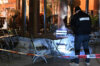
JNS.org – Last week, the contentious protests Israel has experienced over the better part of the past year took a truly heartrending turn with the angry, hostile disruption of a Yom Kippur prayer service in Dizengoff Square in Tel Aviv.
On a day of contrition, humility, self-reflection and forgiveness, a day when our thoughts, prayers and energy are focused upwards and not outwards, we saw Jews literally attack other Jews at prayer.
Why? Because the Jews dared to pray the way that all but a handful of Jews in Israel pray: with a separation of the sexes.
Never mind that the same exact service had been held in previous years without incident. Never mind that the same municipality that condemned separation of Jewish men and women sanctioned the same for Muslim men and women this past June.
There is something very unsettling going on. Whether it is an attempt to whitewash a widely condemned action or a true reflection of the mindset of the attackers, supporters of the protests have claimed that such action was necessary in order to confront “messianic” Jews who by implication have designs on the innocent secular population.
The term “messianic” is in good Orwellian company with other language used by the protesters, who portray the oligarchic Supreme Court as the last bastion of democracy and the duly elected representatives of the people as a dictatorship staging a coup.
“Messianic” is typically meant to convey some kind of hidden agenda, like that of missionary Christians seeking to convert Jews in the guise of “Messianic Judaism.” Some members of Chabad believe that their Rabbe Menachem Mendel Schneersohn was the Messiah, but that does not make them “messianic.” They do not attempt to convince the rest of us to adopt Schneersohn as our Messiah.
Jews have always yearned for the Messiah, but we are not messianic in the way the protesters claim.
There is something deeper, more psychological than theological, at work. Many secular people seem to believe that they have lost their place in Israel as right-wing and religious people increasingly exercise influence and control.
Demographics and election results bear this out, but it is not true that this will result in religious coercion or repressive social constraints.
Do Jewish outreach groups hope that more Jews become observant? Of course. Do they want to force you to do so or to make your life increasingly uncomfortable and constrained if you don’t? Of course not.
Most of the protesters appear to be Ashkenazim. What they do not seem to understand is that Israel’s greatest bulwark against religious coercion is our Sephardi-Mizrachi brethren—Jews who came from Muslim countries.
These Jews are steeped in tolerance and a love of Judaism and the Jewish people combined with a liberal approach to the way such love is expressed or constrained. They are the last people who would welcome a “theocracy” or some kind of “messianic” coercion.
Judaism is doing just fine in Israel, thank you. We do not require everyone to hew to a “line,” if only because there are many “lines.” We cannot, as a people, agree on which “line” should apply. The irony is that a little Jewish literacy might reassure secular people regarding the desires of religious people.
On Sukkot, we learn that the four species represent the totality of the Jewish people. Like the willow, which has neither fragrance nor taste, there are those who have no learning and do not perform the mitzvot, yet they too are part of us.
We are literally bound together as we wave the lulav and etrog. Without the willow, we do not have a kosher lulav. Similarly, without those deprived of learning or mitzvot, we do not have a Jewish people.
Israel faces myriad challenges. Some are external, while others are self-imposed. But there is no threat to secular Israelis. Just as Israeli democracy tolerates the free expression of political views, it should be willing to tolerate the free expression of religious views, whether one agrees with them or not.
Freedom of religion is hardly coercive. Perhaps it can prove to be infectious, but that’s up to each of us. In the meantime, each of us can sit under the fig tree of our own choosing and none of us will be the worse for it.


