



A Passover Guide for the Perplexed 2024
Error: Contact form not found.

 by Yoram Ettinger


The Israel Project and the World Jewish Congress host a pre-Passover seder for foreign diplomats in Israel in 2018. Photo: Avishai Zigman.
Here are eight things you should know ahead of this year’s celebration of Passover:
1. Passover (April 22-30, 2024) is a Jewish national liberation holiday, highlighting the Exodus, the Parting of the Sea, the Ten Commandments, the 40-year-wandering in the desert, and the reentry to the Land of Israel 3,600 years ago.
2. The Abolitionist and human rights movements were spurred by the Passover Exodus. For example, in 1850, Harriet Tubman,who was one of the leaders of the “Underground Railroad,” was known as “Mama Moses.” Moreover, on December 11, 1964, upon accepting the Nobel Prize, Dr. Martin Luther King, Jr. said: “The Bible tells the thrilling story of how Moses stood in Pharaoh’s court centuries ago and cried, ‘Let my people go!’” Furthermore, Paul Robeson and Louis Armstrong leveraged the liberty theme of Passover through the lyrics: “When Israel was in Egypt’s land, let my people go! Oppressed so hard they could not stand, let my people go! Go down Moses, way down in Egypt’s land; tell old Pharaoh to let my people go….!”
3. The US Founding Fathers were inspired by the Exodus, in particular, and the Mosaic legacy, in general, shaping the Federalist system, including the concepts of anti-monarchy, limited government, and separation of powers among three co-equal branches of government. Thomas Paine’s Common Sense — “the cement of the 1776 Revolution” — referred to King George III as “the hardened, sullen-tempered Pharaoh of England.” And the early Pilgrims considered their 10-week-sail in the Atlantic ocean as “the modern day Parting of the Sea,” and their destination as “the modern day Promised Land” and “the New Israel.”
4. According to Heinrich Heine, the 19th century German poet, “Since the Exodus, freedom has always spoken with a Hebrew accent.”
5. Passover highlights the unique resilience, which has surged the Jewish people to new heights (for the benefit of all of humanity), following a multitude of crises such as: the 722 BCE destruction and exile of the Kingdom of Israel by Assyria, the 586 BCE destruction of the First Temple by Babylon, the 70 AD destruction of the Second Temple by Rome, 1736 and 1865 pogroms of the Jews in Persia, the 627 massacre of the Jewish tribe of Quraysh by Muhammed, the 1141 pogroms in Muslim-ruled Andalusia, the 1198 forced Islamization of Jews in Yemen, the 1248 pogroms in Baghdad, the 1290 expulsion of England’s Jews, all the way until today.
6. Passover highlights the central role of women in Jewish history. For instance, Yocheved, Moses’ mother, hid Moses and then breastfed him at the palace of Pharaoh, posing as a nursemaid. Miriam, Moses’ older sister, was her brother’s keeper. Batyah, the daughter of Pharaoh, saved and adopted Moses (Numbers 2:1-10). Shifrah and Pou’ah, two Jewish midwives, risked their lives, sparing the lives of Jewish male babies, in violation of Pharaoh’s command (Numbers 1:15-19). Tziporah, a daughter of Jethro and Moses’ wife, saved the life of Moses and set him back on the Jewish course (Numbers, 4:24-27). They followed in the footsteps of Sarah, Rebecca, Leah and Rachel, the Matriarchs (who engineered, in many respects, the roadmap of the Patriarchs), and many more.
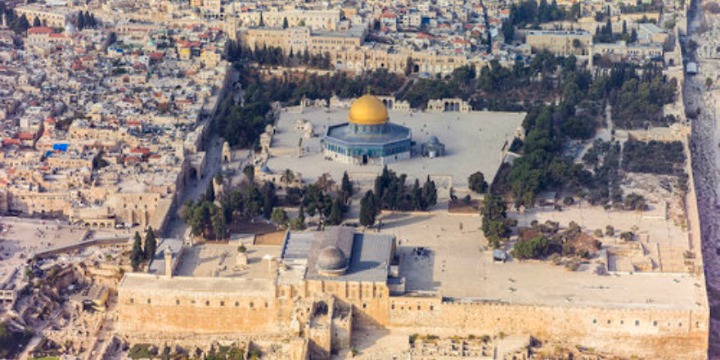
7. Passover is the first of the three Jewish pilgrimages to Jerusalem, followed by Shavuot (Pentecost), which commemorates the receipt of the Ten Commandments, and Sukkot (Feast of Tabernacles), which was named after Sukkota — the first stop in the Exodus.
8. Jerusalem is mentioned three times in the annual story of Passover (Haggadah), which is concluded by the vow: “Next Year in the reconstructed Jerusalem!” Jerusalem has been the exclusive capital of the Jewish people since King David established it as his capital, 3,000 years ago.
The author is a commentator and former Israeli ambassador.