






Could This Gas Field Benefit Israel?
Error: Contact form not found.

 by Michael Harari

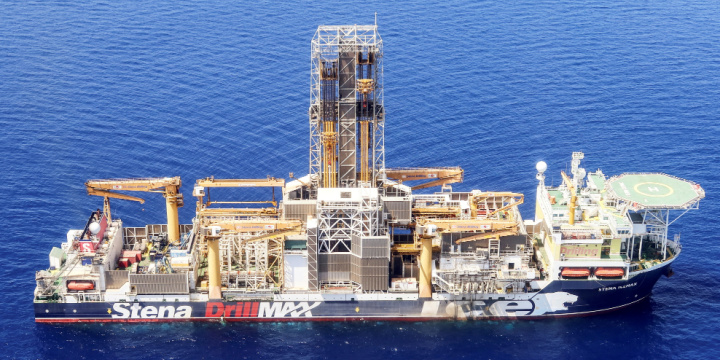
Illustrative: London-based Energean’s drill ship begins drilling at the Karish natural gas field offshore Israel in the east Mediterranean May 9, 2022. REUTERS/Ari Rabinovitch
The Aphrodite gas field was discovered in 2011, and its gas potential is estimated at 124 billion cubic meters. Ownership is divided among three companies: Chevron owns 35%, Shell 35%, and New Med (formerly Delek) 30%. The field is approximately 170 km south of Limassol and 30 km from the Israeli gas field Leviathan.
A small part of the Aphrodite field is in Israel’s economic waters, which means it is a joint, or cross-border, field – a fairly common situation in the global energy arena. The Israeli part is owned by three Israeli companies. Israel and Cyprus have held multiple talks in order to reach an agreement about the field but were not successful, and appear to have left the matter to the companies that are commercially concerned. The likely reason is that the two countries do not want to cloud their close relationship with a dispute over the gas field.
The Aphrodite field has not progressed towards the development stage for a variety of reasons, some of them economic. The reservoir is not particularly large, but it is commercial. No less importantly, it has implications for the “Cyprus problem” — that is, the conflict over the future of the island, which has been divided ever since the Turks invaded it in 1974.
The companies, led by Chevron, and the Cypriot government, represented primarily by its Minister of Energy, conducted complex rounds of negotiations that involved much hand-wringing on the part of the Cypriot minister. A few months ago, the minister went so far as to threaten that if the companies did not return to the original development plan submitted in 2019, he would withdraw the franchise.
Chevron, an American company and one of the largest in the world, won the support of the American government during the negotiations. The President of Cyprus met with the senior Chevron officials and with President Biden’s special envoy, Amos Hochstein, and promised to settle the differences of opinion.
The main dispute concerns the number of wells that will be operated above the field, a matter that reflects the question of supplying gas from the reservoir not just to the export market but to the Cypriot market as well. There was no dispute regarding the export of gas to liquefaction facilities in Egypt (and from there to the local market or other export markets). The updated proposal requires the companies to take on an additional economic cost, along the lines of the original development plan.
The companies’ U-turn on this issue seems to be due to several factors:
- Gas discoveries in the eastern Mediterranean have become more attractive since the outbreak of the war in Ukraine, especially for Europe, considering gas prices on the world market. No less important is the Egyptian market, which urgently requires gas for both local consumption and re-export for the purpose of obtaining foreign currency, a vital need for the faltering Egyptian economy. The Egyptian market is a stone’s throw from the field.
- The proximity of the Aphrodite field to Israel’s Leviathan field, one of the world’s largest gas discoveries of recent years, is a great advantage. The possibility of connecting to Leviathan, one way or another, is on the table (theoretically at least, but with a considerable economic rationale). It depends on an Israeli decision about its preferred export alternative.
- The Cypriot Minister of Energy has wisely leveraged the interest that international companies like BP (British Petroleum) and the UAE’s Adnoc have expressed in stepping into the shoes of the field’s current owners should the negotiations fail. These companies have made their interest clear, and contracts have even been reported to purchase 50% of the Leviathan field (the purchase never took place, perhaps due to the war). It was also reported that the Energean company, which operates the Karish field in Israeli economic waters, has signaled to the Cypriot government that it has an interest in the Aphrodite field.
While the dispute between the Cypriot Minister of Energy and the companies has been settled, the devil is in the details. There is still the “elephant in the room” – the conflict over the future of the island. Negotiations surrounding the reunification of the island have failed time and time again. The Greek part is recognized by the whole world (except Turkey) as the Republic of Cyprus, a member of the European Union. The Turkish part is not recognized internationally by any country other than Turkey. After the last failure in 2017, the Turkish position toughened. In recent years, Ankara has said the only alternative is to divide the island into two countries.
The dispute over the utilization of the proven energy potential in Cypriot economic waters, and its distribution between the two communities on the island, has not been resolved as the island’s future remains unclear. The question constantly in the background is Turkey’s position. Will Ankara allow the Cypriot field to be developed, or will it take assertive steps to make that development conditional on political agreements? It can be argued that the involvement of a huge American company – one that will have the support of the American government in case of tensions or disputes – should soften Turkish opposition. To this must be added the significant improvement that has recently taken place in the relationship between Turkey and Egypt. As mentioned, the latter is in dire need of gas, and the Aphrodite field is close by.
However, the Cypriot conflict is seen by Ankara as a matter of prime strategic importance. The secular opposition parties often take an even more rigid and nationalistic stance than does the Erdogan administration. To this must be added the uncomfortable situation in which Turkish foreign policy finds itself regarding the war in Gaza and its exclusion from any involvement in it.
From a regional perspective, the development of the Aphrodite field, and its connection to Egypt, highlights a fascinating regional relationship that has been forged in recent years following the gas discoveries. This will strengthen Egypt’s current position as well as its ambition to be a regional energy hub (though this would not greatly please Turkey).
Is all of this good for Israel? The answer is yes.
- From a political point of view, the strategy that has developed in recent years of strengthening the regional architecture, with Israel occupying a central place, is in line with Israeli interests. So is the strengthening of Egypt and Cyprus. The Turkish alternative to exporting Israeli gas is not on the agenda, certainly following the war in Gaza.
- From an economic point of view, the dispute surrounding the Israeli part of the Cypriot field will be resolved in commercial negotiations among the companies and will not necessarily require government involvement. This is good for the Israeli companies concerned and for Israel itself.
- The development of the field and its connection to Egypt may strengthen the feasibility of connecting it to the Leviathan reservoir, but this does not reduce Israel’s room for maneuver regarding other possible alternatives, whether a liquefaction facility at sea (FLNG) or another alternative (connection to the liquefaction facility on the Cypriot coast, for example).
Despite the progress that has likely been made between the companies and the Cypriot government, challenges remain. All the parties concerned, companies and governments alike, will have to conduct proactive and creative diplomacy to turn the development of a relatively small but commercial gas field in a highly complex region into a reality.
Ambassador (ret.) Michael Harari joined the Israeli Foreign Ministry and served more than 30 years in a range of diplomatic roles in Israel and abroad, including (among others) in Cairo, London and Nicosia. His final position abroad was as Israeli Ambassador to Cyprus (2010-2015). Today he serves as a consultant in the fields of strategy, policy and energy and lectures in the Political Science Department at the Jezreel Valley College. A version of this article was originally published by the BESA Center.


