





Most Israeli Jews Support Continuation of Lebanon War
Error: Contact form not found.

 by JNS.org


A series of powerful explosions shook Beirut on Friday (September 27) and thick clouds of smoke rose over the city, Reuters witnesses said, in what Lebanese media said were a series of Israeli airstrikes on the Hezbollah-controlled southern suburbs of the city.
JNS.org – A majority of Jewish Israelis back the continuation of the Israel Defense Forces military operations in Southern Lebanon, a survey published by the Israel Democracy Institute on Sunday shows.
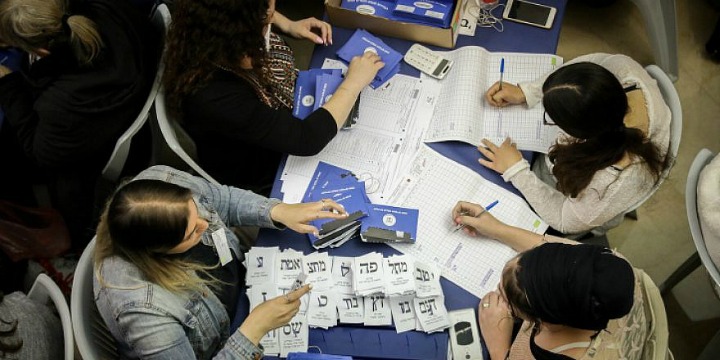
The IDI’s Viterbi Family Center for Public Opinion and Policy Research conducted the November 2024 Israeli Voice Index, which included surveys of 600 men and women in Hebrew, and 150 in Arabic, between Oct. 28 and Nov. 4. The maximum sampling error was ±3.58% at a confidence level of 95%, according to the Israel Democracy Institute.
The survey asked, “In the current situation, on what should Israel focus its efforts in Lebanon?”
A majority of Jewish Israeli respondents (54%) said they support a continuation of the fighting, while a minority (38%) expressed support for ceasefire negotiations with the Lebanese state.
Asked who should control Southern Lebanon after the war, Israeli Jews are split between a multinational military force (37.5%) and the IDF itself (30.5%), with 21.5% saying the Lebanese Armed Forces, 1% answering a weakened Hezbollah, and 9.5% saying they don’t know.
The largest proportion of Jewish respondents told IDI pollsters that they believe the some 60,000 displaced Israeli civilians will be able to return to their homes near the northern border within six months to a year (27%), followed by three to six months (23%) and 30 to 90 days (16.5%).
Turning to the southern front with Hamas, a clear majority (62.5%) agreed that the IDF’s Oct. 16 killing of leader Yahya Sinwar has brought Israel closer to achieving its goal of toppling the terrorist group’s rule in Gaza.
On the Iranian issue, Jews are divided between thinking the IDF responded “appropriately strong” or “too weak” (both 43%) to the Islamic Republic’s Oct. 1 ballistic missile attacks on the Jewish state.
Israel has been battling Iran and its regional terrorist proxies—including Hezbollah, Hamas, Palestinian Islamic Jihad and Yemen’s Houthis—since Hamas launched its Oct. 7, 2023, massacre in which approximately 1,200 people, primarily Israeli civilians, were murdered.