







Boston University Rejects Proposal to Divest From Israel

 by Dion J. Pierre



College students in the Boston, Massachusetts area hold dueling demonstrations amid Israel’s war with Hamas in April 2024. Photo: Vincent Ricci via Reuters Connect
Boston University has rejected the group Students for Justice in Palestine’s (SJP) call for its endowment to be divested of holdings in companies which sell armaments to the Israeli military, becoming the latest higher education institution to refuse this key tenet of the boycott, divestment, and sanctions (BDS) movement against Israel.
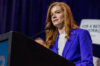
“The endowment is no longer the vehicle for political debate; nevertheless, I will continue to seek ways that members of our community can engage with each other on political issues of our day including the conflict in the Middle East,” university president Melissa Gilliam said on Tuesday in a statement which reported the will of the board of trustees. “Our traditions of free speech and academic freedom are critical to who we are as an institution, and so is our tradition of finding common ground to engage difficult topics while respecting the dignity of every individual.”
Gilliam’s announcement comes amid SJP’s push to hold a student government administered referendum on divestment, a policy goal the group has pursued since Hamas’s massacre across southern Israel on Oct. 7, 2023. Its hopes were dashed on Tuesday when what SJP described as “technical difficulties” caused the referendum to be postponed indefinitely. However, SJP hinted that the delay may have been caused by its failing to draw a “representative sample of BU’s undergraduate population” to the polls.
SJP’s relationship with the university is poor, according to The Daily Free Press, Boston University’s official campus newspaper. In November, the Student and Activities Office issued the group a “formal warning” following multiple violations of policies on peaceful assembly. SJP, the Free Press said, occupied an area of the Center for Computing and Data Sciences for two days and tacked anti-Zionist propaganda — which included accusations that Boston University profits from “death” — on school property inside the building despite being forewarned that doing so is verboten. Following the disciplinary action, SJP accused the university of being “discriminatory towards SJP and our events.”
American universities have largely rejected demands to divest from Israel and entities at all linked to the Jewish state, delivering a succession of blows to the pro-Hamas protest movement that students and faculty have pushed with dozens of illegal demonstrations aimed at coercing officials into enacting the policy.
Trinity College turned away BDS advocates in November, citing its “fiduciary responsibilities” and “primary objective of maintaining the endowment’s intergeneration equity.” It also noted that acceding to demands for divestment for the sake of “utilizing the endowment to exert political influence” would injure the college financially, stressing that doing so would “compromise our access to fund managers, in turn undermining the board’s ability to perform its fiduciary obligation.”
The University of Minnesota in August pointed to the same reason for spurning divestment while stressing the extent to which the Israeli-Palestinian conflict polarizes its campus community. It coupled its pronouncement with a new investment policy, a so-called “position of neutrality” which, it says, will be a guardrail protecting university business from the caprices of political opinion.
Colleges and universities will lose tens of billions of dollars collectively from their endowments if they capitulate to demands to divest from Israel, according to a report published in September by JLens, a Jewish investor network that is part of the Anti-Defamation League (ADL). Titled “The Impact of Israel Divestment on Equity Portfolios: Forecasting BDS’s Financial Toll on University Endowments,” the report presented the potential financial impact of universities adopting the BDS movement, which is widely condemned for being antisemitic.
The losses estimated by JLens are catastrophic. Adopting BDS, it said, would incinerate $33.21 billion of future returns for the 100 largest university endowments over the next 10 years, with Harvard University losing $2.5 billion and the University of Texas losing $2.2 billion. Other schools would forfeit over $1 billion, including the University of Pennsylvania, Stanford University, and Princeton University. For others, such as the University of Michigan and Dartmouth College, the damages would total in the hundreds of millions.
“This groundbreaking report approached the morally problematic BDS movement from an entirely new direction — its negative impact on portfolio returns,” New York University adjunct professor Michael Lustig said in a statement extolling the report. “JLens has done a great job in quantifying the financial effects of implementing the suggestions of this pernicious movement, and importantly, they ‘show their work’ by providing full transparency into their methodology, and properly caveat the points where assumptions must necessarily be made. This report will prove to be an important tool in helping to fight noxious BDS advocacy.”
Follow Dion J. Pierre @DionJPierre.