






The Moulton Moment and the Mamdani Effect: How the Democratic Party Is Abandoning Its Jewish Center
Error: Contact form not found.
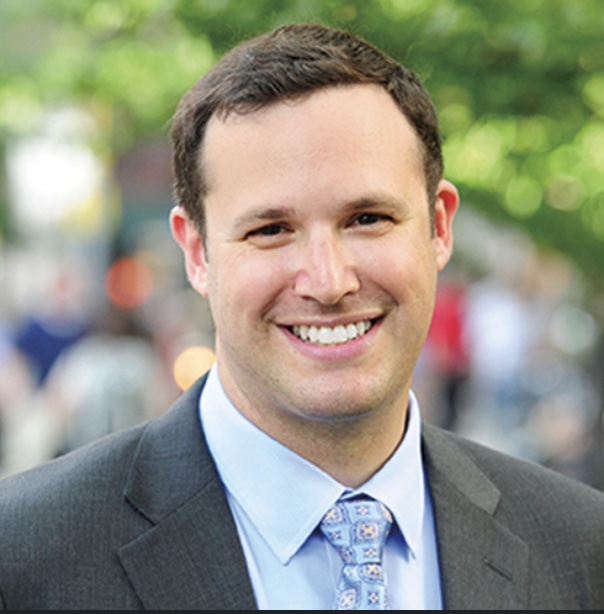
 by Samuel J. Abrams


US Rep. Seth Moulton (D-MA) speaking at a press conference at the US Capitol. Photo: Michael Brochstein/Sipa USA via Reuters Connect
When Representative Seth Moulton (D) of Massachusetts recently announced that he was returning donations from AIPAC and refusing future support, the story barely made national headlines. Yet this small act — a single line on an FEC filing — reveals something much larger. It marks the moment when an ambitious, mainstream Democrat concluded that distancing himself from the organized Jewish community is a political asset, not a liability, and when moral cowardice began to masquerade as conscience.
Moulton is no progressive firebrand. A Harvard-educated Marine veteran, he built his brand on national security and bipartisanship. His decision is not about ideology; it is about survival. Over the past two years, the Democratic Party has entered a new phase of moral performance politics, one in which proximity to Jewish or pro-Israel institutions carries reputational risk among the activists who increasingly shape primaries and online discourse.
Not long ago, Moulton faced an online firestorm for something utterly ordinary: defending his young daughters. During a 2024 interview, he said he did not want them “getting run over on a playing field by a male or formerly male athlete.” The remark — hardly radical — provoked furious denunciations from progressive activists, staff resignations, and a public shaming campaign that painted him as transphobic. He had stumbled across a sacred boundary of the new moral order and learned its central rule: dissent is dangerous.
That experience left its mark. Now, as the next purity test forms around Israel, Moulton has taken no chances. By refunding AIPAC donations, he signals compliance with a rising moral code that defines virtue not by conviction, but by disavowal. In today’s Democratic ecosystem, the act of rejecting traditional Jewish institutions has become a badge of progressive credibility.
This transformation can be understood through what might be called the Mamdani Effect: the process by which Democratic Socialists of America (DSA) ideology, once confined to New York City, has begun reshaping the Democratic Party’s moral and political vocabulary. Named for New York State Assembly member Zohran Mamdani, one of the most visible DSA figures in state politics, this effect blends anti-capitalism, anti-Zionism, and performative solidarity into a single moralized aesthetic. It is a politics of accusation and purity: one advances not by building coalitions but by identifying oppressors and cutting ties.
New York City has served as the laboratory. Once the bastion of pragmatic liberalism — of Ed Koch’s centrist governance and the Jewish-Catholic labor coalition — the city’s politics now turn on moral spectacle. Candidates compete to condemn Israel, police “colonial complicity,” and signal distance from Jewish civic life. The new left does not want to coexist with traditional Democratic institutions; it wants to replace them with a moral movement that prizes purity over pluralism.
The pattern is spreading. Across the country, the activist wing of the Democratic Party has increasingly absorbed the language of the DSA: colonizer, decolonization, abolition. The Democratic Socialists of America formally calls for “the full decolonization of all the occupied lands of the United States” and has established working groups for “police and prison abolition,” and “BDS (Boycott, Divestment and Sanctions).” This rhetoric has migrated from campus protests into the language of progressive representatives — Rep. Alexandria Ocasio-Cortez (D-NY) spoke at the 2020 DNC of repairing “the wounds of racial injustice, colonization, misogyny, and homophobia.” What began as fringe rhetoric now increasingly defines the emotional grammar of the party’s activist base.
Polling confirms the shift. Gallup found that in 2016, 53 percent of Democrats sympathized more with Israel than with the Palestinians; by 2025, that number had collapsed to just 21 percent, while sympathy for Palestinians soared to 59 percent — a nearly three-to-one reversal.
The shift represents a complete reversal from a 30-point advantage for Israel to a 38-point advantage for Palestinians among Democrats over nine years. Among younger Americans (Millennials), sympathies are now essentially tied, with 42 percent sympathizing with Palestinians and 40 percent with Israelis. What was once a bipartisan consensus on the legitimacy of the Jewish State has become a generational and partisan fault line.
For centrist politicians like Moulton, the implications are clear. The activists who dominate social media and small-donor networks increasingly treat Israel as shorthand for Western capitalism and “settler power.” In that moral framework, defending the Jewish State, or even maintaining ties to mainstream Jewish institutions, is suspect. So politicians adapt. Moulton’s decision to reject AIPAC funding is not an act of conviction but of fear: fear of the social media mob, fear of being labeled an oppressor’s ally, fear of losing favor with a base that now equates moral virtue with repudiation. What looks like moral clarity is in fact moral conformity.
That fear is corrosive. It does not only alienate Jews; it hollows out the liberal tradition itself. The Democratic Party that once celebrated pluralism now traffics in exclusion. The heirs of Bella Abzug and Daniel Patrick Moynihan are being replaced by the apostles of Zohran Mamdani: a politics that thrives not on solidarity but on sanctimony.
For American Jews, the cost of this transformation is profound. For nearly a century, Jews were among the architects of the Democratic coalition; builders of unions, schools, and civic institutions. They embodied the idea that liberal democracy worked: that minorities could flourish through education, engagement, and shared civic purpose. The synagogues that hosted voter drives, the Jewish Community Centers that welcomed refugees, the federations that funded civil-rights lawyers. These were not instruments of power but of civic faith. Yet as the party moralizes, belonging itself has become conditional. The new progressive creed demands repentance for association with power, success, or Israel.
Jewish institutions — synagogues, federations, philanthropic networks — are recast not as engines of community but as symbols of privilege.
The Moulton moment and the Mamdani Effect together capture the collapse of liberal pluralism into moral puritanism. What began as a movement for equality has hardened into a system of ideological compliance. Its adherents are sincere, but their sincerity is illiberal. They mistake outrage for justice and purification for progress. When mainstream Democrats start treating Jewish civic life as a reputational hazard, they do not merely abandon a community. They abandon the civic model that sustained American liberalism itself. The party that once trusted persuasion now rewards excommunication.
Yet there is still time to recover a better tradition. Courage is contagious. Moulton could have chosen differently; others still can. It is possible to defend women’s sports without fear. It is possible to support Israel’s right to exist without apology. It is possible, even now, to build a Democratic politics rooted not in shame but in shared responsibility.
This is the new political fault line: not left versus right, but Marxism versus capitalism, moral theater versus civic realism, conformity versus courage.
Moulton may think he is protecting his political future, but what he is really revealing is the fragility of a party that now punishes independence and rewards retreat. If Democrats wish to remain a serious moral force, they must rediscover what liberalism once knew: that pluralism is not complicity, and that solidarity requires standing with allies even when it is unfashionable.
As Alexis de Tocqueville warned nearly two centuries ago, “Liberty cannot be established without morality, nor morality without faith.” The Democratic Party’s crisis is not tactical but moral. Liberty cannot endure without the faith that binds citizens together and that faith begins with courage.
Samuel J. Abrams is a professor of politics at Sarah Lawrence College and a senior fellow at the American Enterprise Institute.