


The New York Times Strikes (Out) Again
Error: Contact form not found.

 by Jerold Auerbach

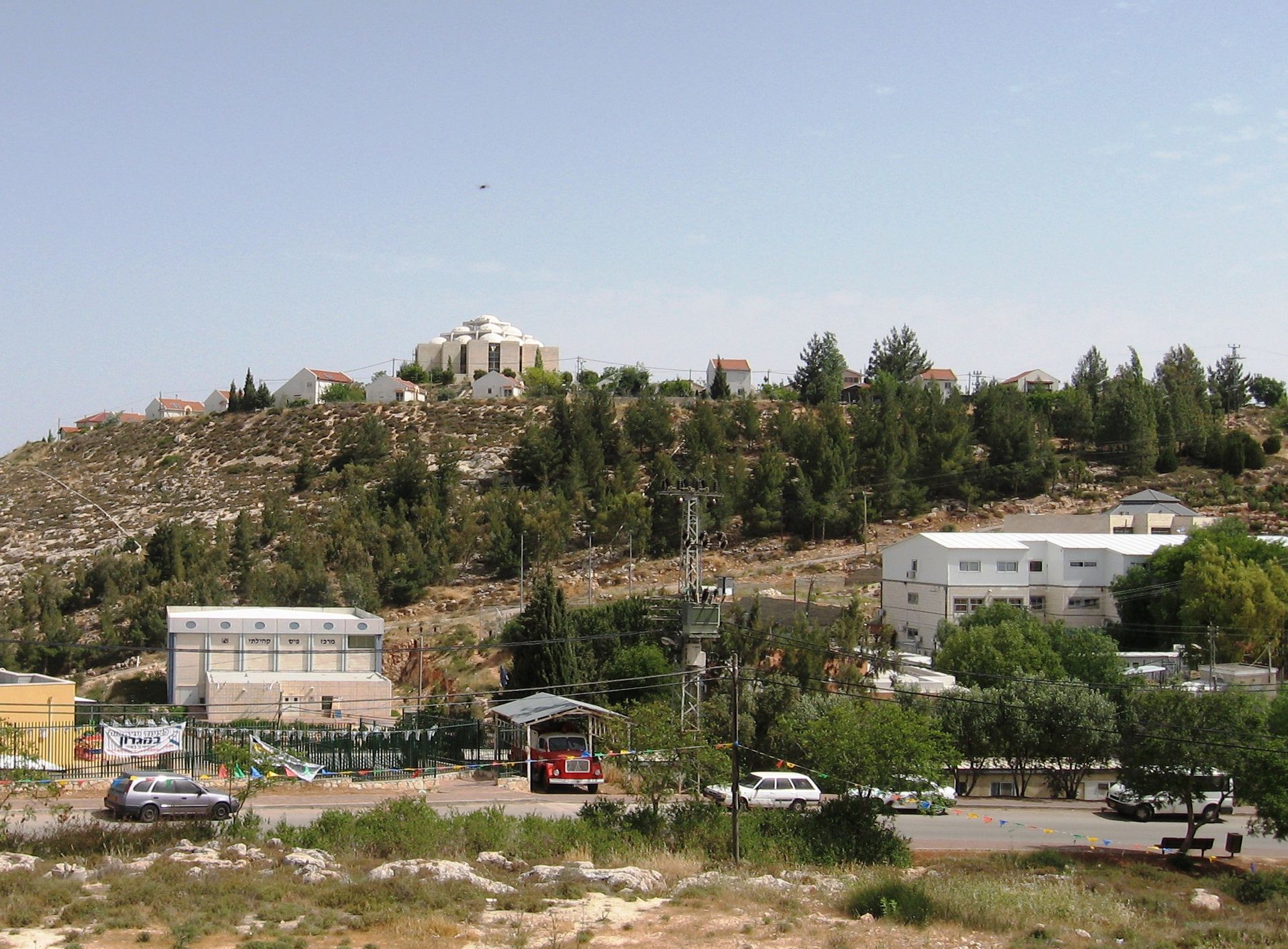
The Jewish community of Shiloh in the northern West Bank. Photo: Twitter
When it comes to Jewish settlements, The New York Times has long had a low boiling point. Railing at Israeli government approval for “the construction of a new Jewish settlement in the West Bank” (October 7), the editors reflexively echo erroneous State Department claims that this “significant new settlement” would be “far closer to Jordan than Israel.”
But the “new settlement” is not new. The Israeli government plans to relocate 40 families from the outpost of Amona to the nearby settlement of Shiloh, built in 1978. Shiloh, as it happens, was the first capital of ancient Israel, where the holy Tabernacle, described in detail in the Book of Exodus, was located. Long before King David ruled from Hebron and then Jerusalem, Shiloh was deeply embedded in Jewish history in the Land of Israel. As to distance: located roughly midway between Israel’s pre-1967 boundary and Jordan, Shiloh hardly is “far closer” to the Hashemite Kingdom than to the Jewish state.
The Times’ Jewish problem, amply revealed in its pages for 120 years, is well known. Only months before Adolph S. Ochs purchased the newspaper in 1896, launching the family dynasty inherited by the Sulzbergers four decades later, a Viennese journalist had published a slim “pamphlet” (as he called it). Entitled The Jewish State, Theodor Herzl urged restoration of Jewish national sovereignty in Palestine after nearly 2,000 years. The menacing cloud of dual loyalty has hovered over the Times ever since, guiding its aversion to Zionism and prolonged discomfort with the idea, no less reality, of Jewish statehood.
Even given its endlessly reiterated hostility to settlements, fed by anxiety lest it be on the wrong side of the American government on a Jewish issue (thereby raising questions about its patriotism), the Times outdid itself in its October 7 edition. Its lead international story, accompanied by four photos and a map, was headlined: “Bracing for Battle in a West Bank Outpost.” Its focus: 40 Jewish families living in Amona who must, according to an Israeli Supreme Court order, vacate their homes by December 25.
Two photos, ironically, depict rural tranquility. A Jewish mother, holding one child and following another, walks along an empty road in the Samarian hills, with a cluster of scattered homes visible on a nearby rise. In the other, Jewish children are enjoying swinging and climbing in their Amona playground. Times reporter Isabel Kirshner anticipated a looming battle between settler residents (to be joined by thousands of sympathizers) and government security forces. It would test Prime Minister Netanyahu’s political agility in reconciling the competing demands of his right-wing governing coalition with the judicial mandate, international opprobrium, Obama administration criticism — and New York Times fury.
Kirshner is no stranger to the issue of Jewish settlements. She joined the Times in 2007, two years after the publication of Barrier, her report on “the seam of the Israeli-Palestinian conflict” along the security fence implanted by Prime Minister Ariel Sharon to stymie Palestinian terrorist attacks. Her own political position was clearly stated: “Unbridled Jewish settlement in the West Bank endangers any real possibility of implementing a two-state solution.” Convinced that “each side’s fear of the other is the essence, and the tragedy, of the conflict,” she wore the badge of moral equivalence that has long defined – and distorted — Times coverage of Israel.
It was hardly surprising, therefore, that Kirshner offset an Israeli lawyer who has lived in Amona (now with his wife and seven children) since its establishment in 1996 with the Palestinian resident of a nearby town who claims to have inherited an eight-acre plot “on the edge” of the settlement. An accompanying photograph, five columns wide, displays Hamed and his sister, seated on rocks overlooking their lost land. In the Times, moral equivalence yields only to immoral victimization of innocent Palestinians by conquering Israelis.
“All the news that’s fit to print” – or all the news that fits the unrelenting New York Times narrative of Israeli culpability for Palestinian suffering amid the absence of peace that Palestinians have resolutely resisted?
Jerold S. Auerbach is author of the forthcoming Print to Fit: The New York Times, Zionism and Israel: 1896-2016.