

Israel’s Netanyahu Orders Attacks on Hezbollah in Beirut’s Southern Suburbs
Error: Contact form not found.

 by Reuters and Algemeiner Staff

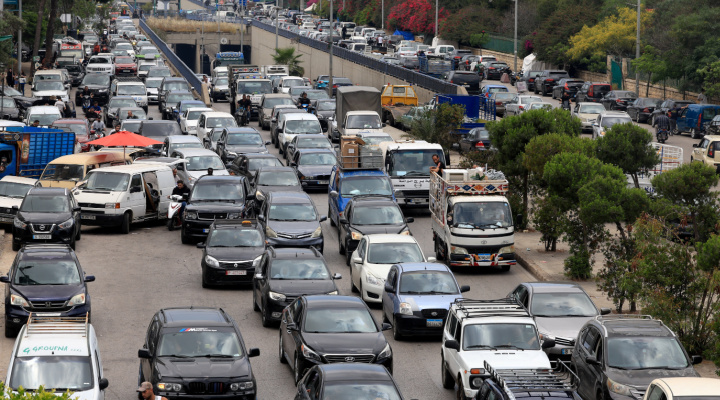
Traffic on a road as people make their way while fleeing the southern suburbs of Beirut, after Israeli Prime Minister Benjamin Netanyahu ordered the military to attack
Hezbollah targets in the suburbs, Lebanon, June 1, 2026. Photo: REUTERS/Mohamed Azakir
Israeli Prime Minister Benjamin Netanyahu ordered attacks on the Hezbollah-controlled southern suburbs of Beirut on Monday, signaling further escalation against the Iran-backed Lebanese terrorist group.
People began fleeing Beirut’s southern suburbs, known as Dahiyeh, in response to news of Netanyahu‘s order — the latest wave of displacement in a conflict that has uprooted more than 1 million people in Lebanon.
Having pounded Beirut’s southern suburbs in the early weeks of the war, Israel has carried out only two strikes on the area since US President Donald Trump announced a Lebanon ceasefire on April 16, even as hostilities have raged in southern Lebanon.
“I instructed the [military] to expand its ground maneuver in Lebanon,” Netanyahu said in a statement.
“There will be no situation in which Hezbollah attacks our cities and our citizens, and its terrorist headquarters in Beirut, in Dahiyeh, will remain out of bounds,” Netanyahu added.
Netanyahu said Israel was continuing to deepen its ground activity in Lebanon, where Israeli troops have carved out a self-declared security zone in the south, saying they aim to shield northern Israel from Hezbollah attacks.
The Israeli military later said it would strike targets in the southern suburbs if Hezbollah continued to launch rockets at Israeli towns and cities, and warned residents to leave the area.
HEZBOLLAH FIRES ROCKETS AT ISRAEL
Hezbollah, established by Iran’s Revolutionary Guards in 1982, said its fighters had fired a missile salvo targeting Israeli military infrastructure in the Israeli city of Tiberias at 1 am on Monday, among other attacks it said were in response to Israeli ceasefire violations.
On Sunday, Hezbollah said that it had fired rockets at Israeli military infrastructure in the city of Nahariya.
Israeli Defense Minister Israel Katz said there would be no “calm” in Beirut if there was no “calm” in northern Israel.
Lebanese authorities say more than 3,400 people have been killed in the country as a result of Israeli attacks since March 2, when Hezbollah opened fire at Israel following the US-Israeli attack on Iran. According to Israeli officials, most of those killed have been Hezbollah fighters.
Israel says 24 of its soldiers and four civilians have been killed over the same period.
Hostilities intensified in the south over the weekend, with Israeli troops capturing the 900-year-old Beaufort Castle, located on a strategic ridge overlooking the border zone.
The advance into Beaufort Castle has granted Israeli troops a vantage point over much of southern Lebanon and northern Israel, from which attacks have been launched toward Israeli residential areas.
It was the first time Israel had held the site since May 2000, when Israel withdrew its troops from southern Lebanon after 18 years.
Israeli troops and Hezbollah have continued to trade fire since the mid-April ceasefire, with Hezbollah resorting to the use of cheap, easy-to-assemble kamikaze drones that are hard for air defenses to thwart and that have killed several Israeli troops in southern Lebanon.
The Israeli military already controlled territory up to the Litani River in Lebanon, but troops are pushing to the Zaharani River, around 10 km north.
Netanyahu said his aim is to “deepen and expand our grip on the places that were under Hezbollah‘s control.”
DISPLACED THREE TIMES
“This is the third time since the ceasefire that we’re going from place to place,” said Naji Musulmani, 61, driving a pick-up truck full of mattresses through clogged Beirut streets away from the southern suburbs.
Having fled the south in recent days, Musulmani said he would head to the city of Tripoli in northern Lebanon.
Iran’s foreign ministry spokesperson said that Israeli attacks in Lebanon were among factors delaying the diplomatic process to end the US-Iran war, and reiterated that a Lebanon ceasefire was an integral part of any deal.
Iranian Foreign Minister Abbas Araqchi, writing on X after Netanyahu ordered the attacks on Dahiyeh, said a ceasefire in place between Iran and the United States since April was “unequivocally a ceasefire on all fronts, including in Lebanon.”
“Violation on one front is a violation of the ceasefire on all fronts. The US and Israel are responsible for the consequences of any violation,” he wrote.
US PROPOSES GRADUAL DE-ESCALATION
Hostilities have continued in Lebanon despite a series of rare meetings between the Lebanese and Israeli governments, overseen by Washington.
A US official said on Sunday that Secretary of State Marco Rubio spoke with both Lebanese President Joseph Aoun and Netanyahu on the diplomatic negotiations between Israel and Lebanon and proposed a plan to allow for “gradual de-escalation.”
As a first step, Hezbollah would stop all attacks on Israel and in return Israel would refrain from escalation in Beirut, the US official said.
The official added that Aoun tried to advance the proposal and secure an agreement. However, they said Lebanese Parliament Speaker Nabih Berri, who claimed to “guarantee” Hezbollah’s commitment to a ceasefire, placed the burden on Israel to stop “shooting first.”
Berri, a Hezbollah ally, in a comment reported by Lebanese media on Sunday, said he would guarantee “full and immediate commitment to a ceasefire” by Hezbollah. “But the question is, who will compel Israel to stop its aggression?” he said.
A senior Lebanese source told Reuters that the US proposal had involved a halt to Hezbollah’s attacks on northern Israel in exchange for sparing Beirut and its suburbs further strikes, as a step toward a full ceasefire.
The source said Berri, however, wanted a full and comprehensive ceasefire instead of a piecemeal approach.