



Nintendo Apologizes for Anti-Israel Graffiti in Video Game

 by Shiryn Ghermezian


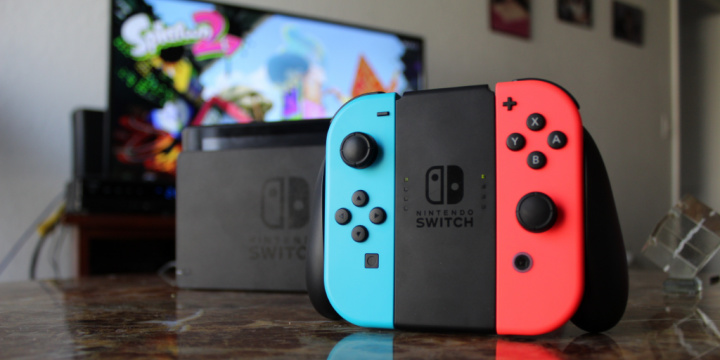
A Nintendo Switch controller is shown as Nintendo’s Splatoon 2 appears on a television screen in the background. Photo: Wikimedia Commons.
The major electronics and video game company Nintendo apologized for anti-Israel graffiti that was found in one of its video games by a child, according to a legal advocacy group that alerted the company.
A youngster playing the shooting video game Nintendo Splatoon 2 — in which “Inklings” splat ink and try to claim territory — took a screenshot on May 18 that showed the phrase “F–k Israel” written, as if in graffiti, on a wall in the game. Splatoon 2 has a rating by the Entertainment Software Ratings Board (ESRB) of “Everyone 10+” and according to ESRB, it may contain “mild language.”
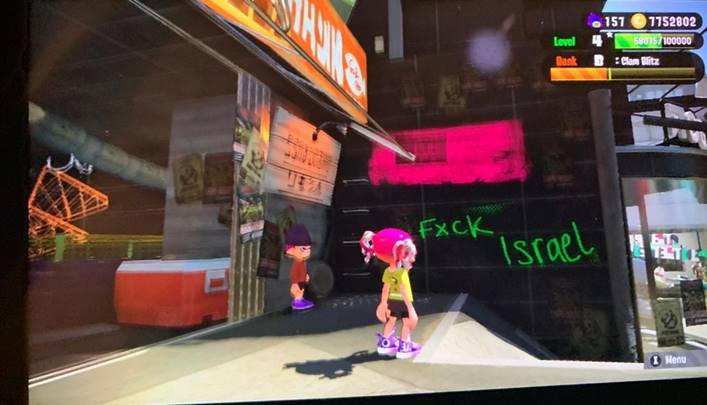
Photo: UK Lawyers for Israel
The group UK Lawyers for Israel (UKLFI) said that after it contacted ESRB and Nintendo’s legal counsel about the offensive graffiti on May 20, Nintendo replied by apologizing for the graffiti and upset that it may have caused the child who discovered it.
Rob Posgate, legal counsel to Nintendo UK, said in a May 24 email to UKLFI Director Caroline Turner, “We can assure you that the anti-Israel graffiti that the child saw was not generated by Nintendo as part of the design of the game, Splatoon 2. We strongly condemn such statements, and the sentiments behind them.”
Posgate explained that the the anti-Israel graffiti was found in a waiting area for players before they decide which battle arena to join in the game, where users may create and display content, including graffiti painted on walls.
“The vast majority of our users generate harmless and fun content,” Posgate said. “Unfortunately, a very small minority of users may from time to time use this functionality to post harmful and offensive messages. To protect our users from this abusive behavior, we include a reporting functionality within the game.”
He added that “User generated content that is displayed in this graffiti format is randomly posted, and regularly rotated so that any such graffiti would only be displayed for a short while.”
ESRB said in its own email to Turner that online-enabled games, like Splatoon 2, allows players to add their own content to the game, such as text or voice chat, skins for characters or maps for background images. Games that have been rated by the ESRB and permit player-generated content are required to add an Online Rating Notice to the game’s packaging, as well as in the opening screen, and the notice states that “online interactions [are] not rated by the ESRB.”
Turner encouraged video game players to report offensive content, which Nintendo can remove if it’s reported using the in-game option. The functionality also lets Nintendo monitor repeated or serious offenses that can result in users being temporarily or permanently banned from a game.
Turner said, “If anyone else comes across inappropriate content in a video game, it is important to report this to the video game company, so that the offensive content can be removed as soon as possible, and the offenders can be barred from the game. We are pleased that Nintendo has highlighted the reporting function on their games.”


