





Experts, Former Trump Officials Slam US-Iran Agreement
Error: Contact form not found.

 by Corey Walker


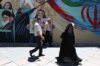
A man holds an Iranian flag near an anti-US billboard depicting US President Donald Trump and the Strait of Hormuz, in Tehran, Iran, May 30, 2026. Photo: Majid Asgaripour/WANA (West Asia News Agency) via REUTERS
A draft memorandum of understanding (MOU) between the United States and Iran is drawing growing criticism from foreign policy experts and former Trump administration officials, who argue the proposed framework could leave Tehran in a stronger strategic position while offering major concessions before securing permanent restrictions on its nuclear program.
The concerns intensified after the full text of the 14-point framework emerged on Wednesday, outlining a 60-day negotiating period intended to produce a comprehensive agreement following months of war and backchannel diplomacy. While the Trump administration has described the memorandum as a temporary framework rather than a final peace deal, critics say several of its provisions could fundamentally reshape the regional balance of power.
Under the proposed MOU, Iran would reopen the Strait of Hormuz to commercial shipping, cooperate with the International Atomic Energy Agency on its highly enriched uranium stockpile, and commit not to pursue nuclear weapons. In exchange, Washington would lift its blockade on Iranian ports, suspend certain sanctions, facilitate Iran’s return to global oil markets, establish a pathway for the release of frozen Iranian assets, and launch negotiations over a broader agreement during a 60-day window. The framework also envisions a multibillion-dollar international reconstruction initiative for Iran if a permanent accord is reached.
The administration has emphasized that the agreement remains conditional. Senior US officials insist both sides retain the ability to walk away from negotiations and say significant sanctions relief will ultimately depend on Iran fulfilling its nuclear commitments. Officials have also stressed that sequencing, the order in which both countries carry out their obligations, will be the central issue during the next phase of talks.
Still, many analysts argue that the framework contains ambiguities that could work in Iran’s favor.
Iran “has emerged from the conflict in a stronger strategic position,” according to the Institute for the Study of War, which warned that the deal could significantly expand Iran’s capacity to rebuild its regional and military capabilities if sanctions relief proceeds as outlined. The think tank said the MOU grants Iran substantial economic relief, which it would likely use to “reconstitute its missile, drone, and nuclear programs, as well as the Axis of Resistance.”
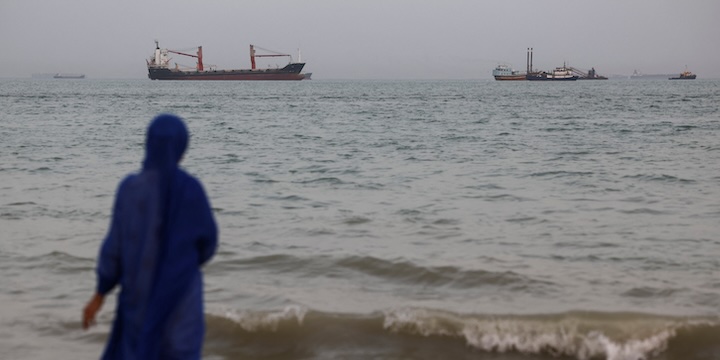
Analysts further cautioned that Iran could seek to exploit vague or unclear provisions regarding the Strait of Hormuz, potentially attempting to assert greater control over maritime traffic through one of the world’s most critical energy chokepoints.
David Albright, president and founder of the Institute for Science and International Security, argued that the MOU’s central nuclear commitment contains significant loopholes. The circulated text states only that “Iran reiterates that it will never produce nuclear weapons,” language Albright described as dangerously narrow because it does not explicitly prohibit Iran from developing, testing, manufacturing, acquiring, or possessing a nuclear weapon.
“These versions agree on a very dangerous, leaky opening sentence,” Albright posted on social media. “This commitment is incomplete from normal standards and experience, since it has giant loopholes that could allow an ever-devious Iranian regime to continue working on developing nuclear weapons and building components, while insisting it is not producing nuclear weapons.”
Albright argued the provision should instead commit Iran to “never develop, test, produce, manufacture, otherwise acquire, possess nuclear weapons,” language he said would close potential loopholes and also prohibit Iran from purchasing a nuclear weapon outright.
Mark Dubowitz, CEO of the Foundation for Defense of Democracies, also raised major concerns about the economic structure of the deal. He argued on X that the MOU could effectively function as a multibillion-dollar transfer to Tehran in exchange for maintaining stability in the Strait of Hormuz, writing that the agreement may amount to a $25 billion “toll” paid over several months based on projected oil revenues.
Dubowitz estimated that at roughly 2 million barrels per day at $75 per barrel, Iran could generate around $5 billion per month, totaling approximately $25 billion over five months, before even accounting for access to an estimated $100 billion in frozen assets. He warned that the key unanswered questions are how much of those funds Iran would actually be able to repatriate, how they would be used, and whether the easing of sanctions would undermine the US financial pressure architecture.
“If that’s the deal, America will be paying protection money to the IRGC,” Dubowitz said, referring to Iran’s Islamic Revolutionary Guard Corps (IRGC).
Some experts have also focused on provisions affecting the broader region. Language committing all parties to cease hostilities and respect Lebanon’s sovereignty has fueled concerns among Israeli officials and supporters that Iran or its proxy Lebanese Hezbollah could interpret the agreement as limiting Israel’s future military operations in Lebanon, despite US officials insisting Israel retains the right to defend itself.
American Jewish organizations have likewise expressed unease over the emerging agreement, warning that the framework appears to prioritize de-escalation over permanently curbing Iran’s military and nuclear capabilities, while also raising concerns about sanctions relief providing Tehran with new financial resources before a final deal is secured.
Former US Secretary of State Mike Pompeo, who served as the country’s top diplomat in the first Trump administration, also weighed in as the debate intensified, framing the emerging dispute over the agreement as a distraction from what he sees as the core issue.
“The rumored rift between Washington and Jerusalem over Iran is music to the ears of anti-Israel figures on both the left and right,” Pompeo posted on social media. “But there’s only one country that’s responsible for prolonging this war: the Islamic Republic. We cannot afford to lose sight of that.”
Former Vice President Mike Pence, who also served during Trump’s first term, also criticized the emerging deal, saying on CNN: “I don’t be like what I’m hearing about the MOU … it smacks of appeasement.”
Even some analysts broadly supportive of diplomacy have cautioned that the memorandum should not be viewed as a completed agreement. Experts note that the document functions primarily as a framework establishing negotiating principles rather than resolving the most difficult issues, including verification measures, enrichment limits, missile development, and the future of Iran’s regional proxy network. They argue that the 60-day negotiating timeline may prove too short to address the technical and political complexities involved.
Supporters of the memorandum counter that the alternative in their view, a continuation of regional war, would carry far greater risks.
World leaders at the G7 have largely welcomed the framework as an opportunity to stabilize global energy markets and reduce the risk of further escalation.
“They want this to go on until every bomb has been dropped, or until every Iranian is dead. That is not what the President of the United States wants,” US Vice President JD Vance said in a Tuesday interview on “The Megyn Kelly Show.”
The memorandum is expected to be formally signed in Switzerland before negotiators begin the 60-day process of attempting to convert the framework into a binding agreement.