

Why Does the Media Ignore ‘Other’ Palestinian Humanitarian Issues?
Error: Contact form not found.

 by Rachel O'Donoghue

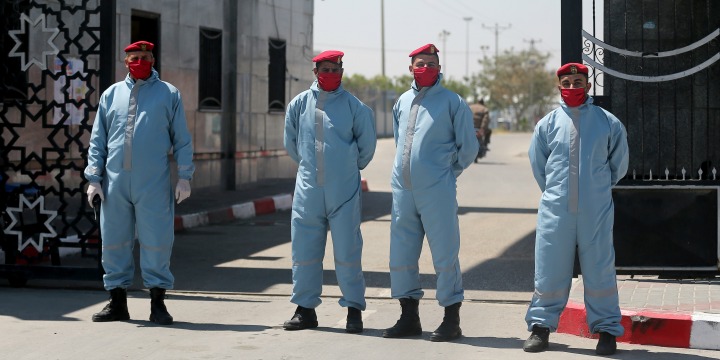
Hamas members wear protective gear as a precaution against the coronavirus disease (COVID-19), at the Rafah border crossing in the southern Gaza Strip, April 13, 2020. Photo: Reuters / Ibraheem Abu Mustafa.
News coverage of the supposed dire living conditions endured by Palestinians in the West Bank and Gaza Strip is not hard to find. In the aftermath of the Gaza war (which was initiated by Hamas), numerous pieces published in high profile outlets have focused specifically on the hardships faced by Gazans, who, by happenstance, live under terrorist rule (see here, here, and here).
As is unfortunately par for the course, much of the coverage ignores the role that Hamas has played in both creating and maintaining the poor conditions experienced by residents in the Strip.
Indeed, Gaza would be in much better shape if Hamas would, for example, agree to return two Israeli citizens who have been held hostage for over five years, as well as the remains of two IDF soldiers. Jerusalem would then be more inclined to offer greater assistance and be more flexible in regards to post-war reconstruction efforts in the enclave. Palestinians would also be better off if Hamas actually used the international funds it has received to help improve living conditions, rather than rebuilding its terrorist infrastructure.
Furthermore, many media outlets like to bury or totally ignore the fact that while most Gazans live in poverty, Hamas enjoys the ignominious status of being one of the wealthiest terrorist organizations in the world. Thanks to generous funding by Iran, Gaza’s rulers rake in approximately $700 million per year — a tidy sum that allows the organization to purchase the munitions it has a habit of storing in heavily built-up civilian areas, or underneath schools and hospitals; this, instead of investing in civilian infrastructure or programs to enhance the lives of ordinary people.
Reams of column inches also were recently dedicated to the Sheikh Jarrah/Shimon HaTzadik affair (see here and here) — essentially a property dispute centered around Arab tenants who want to shirk their rent responsibilities — that captured the world’s attention because it was another opportunity to cast Israel as an aggressor against defenseless Palestinians.
In the last week, Israel has once again been thrust into international headlines following the outbreak of hostilities along its northern border with Lebanon. Rocket attacks claimed by Palestinian terrorist factions and, most recently, Hezbollah, as well as the retaliatory shelling and airstrikes by the IDF were widely reported on.
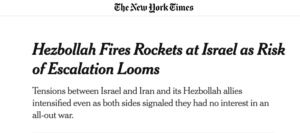
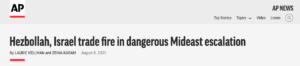
However, something that was barely worth a mention in these articles is that Lebanon is currently on the verge of total collapse due to an economic and political crisis. Furthermore, rarely is a reference made to Iranian terror proxy Hezbollah’s role in deepening the emerging catastrophe, including by having rejected a comprehensive bailout program by the International Monetary Fund.
Perhaps most striking of all is the absence of any articles in the mainstream press that draw attention to the plight of one of the hardest-hit groups in Lebanon — the Palestinians who live there.
The misery of this 300,000-strong population cannot be understated: they are barred from various fields of employment; in many cases prevented from owning property; and are deprived access to education. Charities have noted that their already bad situation has been compounded by the country’s ongoing crisis and now many do not even have enough food to eat.
Yet, no articles about this topic have appeared in any of the mainstream publications that normally like to highlight perceived injustices faced by Palestinians.
According to HonestReporting’s own data, Palestinian refugees in Lebanon were mentioned by all news sites in the United States a total of only 86 times in the last 30 days. Over the same period, Palestinians in Gaza were written about more than 5,000 times.
Likewise, social media mentions — especially from celebrities who pride themselves on highlighting the world’s injustices — have been quiet about this worsening problem.
Case in point: Supermodel Bella Hadid this week used her Instagram platform and its close to 50 million followers to simultaneously advertise her Vogue cover shoot, and call for a “free Palestine.” Despite the fact her father was once briefly a refugee in Lebanon before emigrating to the United States and becoming a real estate magnate, she has yet to specifically address the issue.


Is there any doubt about why the media chooses to ignore the Palestinian issue in Lebanon, yet churns out numerous articles about residents of the Gaza Strip?
Rachel O’Donoghue is a contributor to HonestReporting, a Jerusalem-based media watchdog with a focus on antisemitism and anti-Israel bias — where a version of this article first appeared.