



Israel’s Netanyahu, Gantz Say Near Unity Deal to End Political Deadlock
Error: Contact form not found.

 by Reuters and Algemeiner Staff


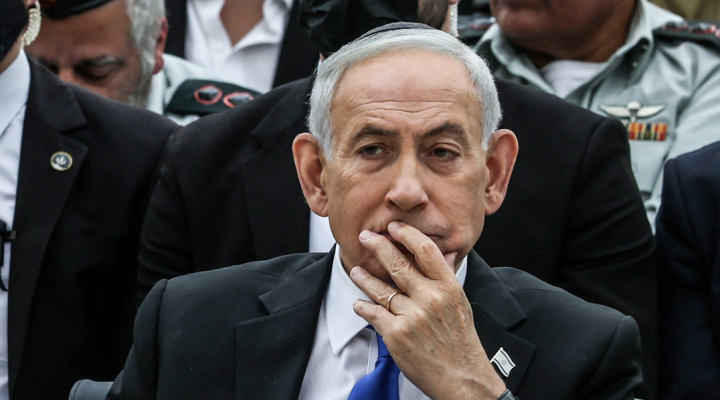
Benny Gantz, leader of Israel’s Blue and White party, and Prime Minister Benjamin Netanyahu. Photos: Reuters / Corinna Kern, Amir Cohen / File.
Israeli Prime Minister Benjamin Netanyahu and his main rival Benny Gantz were nearing a deal on Tuesday to form a national emergency government to battle the coronavirus crisis and end the country’s unprecedented political deadlock.
Gantz’s 28-day mandate to put together a ruling coalition after last month’s inconclusive election was due to expire at midnight, but President Reuven Rivlin, who is overseeing the coalition talks, extended it for two days.
Rivlin did so, his office said, “on the understanding that they are very close to reaching an agreement.”
Gantz and Netanyahu met overnight in a last-ditch effort to settle their differences. Afterward they issued a joint statement saying they had made “significant progress.” The two are set to meet again with their negotiating teams later in the morning.
The impasse, after national elections in April and September 2019 and again last month, raised the prospect of a fourth ballot, complicating any plans for economic recovery once the coronavirus outbreak eases.
Without a deal, it would be up to parliament to pick a candidate who would then have 14 days to form a government. Failure to do so would automatically trigger a snap election.
“Netanyahu, this is our moment of truth. It’s either a national emergency government or, God forbid, a fourth election which would be expensive and, in this crisis period, gratuitous,” Gantz said late on Monday in broadcast remarks.
Gantz said the enormity of the coronavirus emergency had caused him to break a campaign promise not to sit in a government with Netanyahu, who has been indicted on corruption charges.
Netanyahu, who has headed successive caretaker administrations during the political stalemate, denies the charges.
In his own televised statement, the veteran premier imposed a ban on inter-city travel for the final days of the Passover holiday this week to stem the spread of the coronavirus.
Restrictions already in place have confined most Israelis to their homes for weeks, forcing many businesses to close and sending unemployment soaring to more than 25%.
Netanyahu said his cabinet could formulate an “exit strategy” as soon as this weekend, though he cautioned restrictions on the economy and education would be eased gradually and that there would be no full return to routine before a coronavirus vaccine is discovered.