





Polish and Israeli Officials Unveil Plaque Recognizing Discrimination Against Jewish Students

 by Andrew Bernard


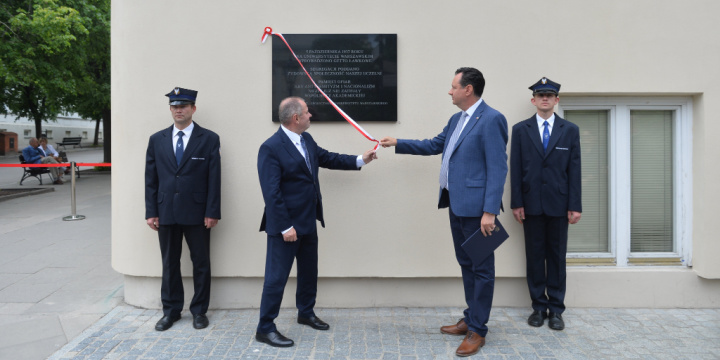
Unveiling of a plaque commemorating the victims of the bench ghetto. Photo: Mirosław Kaźmierczak/UW
Close
The University of Warsaw on Monday unveiled a plaque recognizing for the first time the ‘bench ghetto’ seat segregation that Jewish students in Poland were subjected to in the 1930s.
The ceremony to unveil the plaque for victims of the bench ghetto was led by Israeli Ambassador to Poland Yacov Livne and Warsaw University Rector Alojzy Nowak.
“On October 5, 1937, the so-called ‘bench ghetto’ was established at our university,” Nowak said. “Students of Jewish descent could not independently choose their seats during lectures and classes. The attitude of those who did not agree with such a direction and did not intend to comply with such regulations should be recalled. Some Jewish students preferred to stand in class rather than sit in their designated desks. Similarly, some Polish students did not take their seats during the lectures to show solidarity with the persecuted Jewish minority and also listened to the lectures standing up. Such attitudes were and are worthy of admiration and imitation.”
Poland regained its independence following the First World War and by the 1930s adopted various forms of legal and institutional antisemitism. Polish universities including Lviv Polytechnic, the University of Vilnius and the University of Warsaw introduced discriminatory regulations against Jews, culminating in the ‘bench ghetto’ that required Jewish students to sit in specifically designated sections. 98% of Poland’s Jewish population was ultimately killed in the Holocaust following the Nazi invasion of Poland in 1939.
Israeli Ambassador Yacov Livne said that in commemorating the bench ghetto for the first time, it was important to mark both the good and bad events connecting Poland and the Jewish people.
“I am honored and happy that I can be here today and see dozens of people commemorating in the center of Warsaw the victims of the dark sides of events connecting the history of our nations,” Livne said. “Remembering the true face of history – with its good and bad sides – is very important. If we do not remember the past, it will be difficult for us to understand the present and build a better future.”


