



UK Paper Inadvertently Exposed Terror-Supporting Palestinian Chess Club — Then Hid the Evidence
Error: Contact form not found.

 by Simon Plosker


Hamas leader Yahya Sinwar looks on as Palestinian Hamas supporters take part in an anti-Israel rally over tension in Jerusalem’s Al-Aqsa mosque, in Gaza City, Oct. 1, 2022. Photo: REUTERS/Mohammed Salem
Millions of Britons pick up Metro UK each morning on the London Underground, expecting light news and human-interest stories. So readers could be forgiven for thinking they’d stumbled on a heartwarming feature about a Palestinian chess club offering hope to young refugees.
Titled, “How a chess club took on a refugee camp’s darkest forces – and won,” the story by Gergana Krasteva instead focused on putting a positive spin on some very dark forces within the chess club itself.
And when Metro UK was called out by HonestReporting, editors went to great lengths to cover up the evidence.
There were several obvious clues in the piece that the Palestinian Chess Forum’s focus isn’t exactly benign. For example, the photograph of a map of “Palestine” on the wall, where the colors of the Palestinian national flag cover the entirety of the State of Israel.
But that’s actually subtle compared to the photos Metro included of huge portraits of Hamas October 7 massacre mastermind Yahya Sinwar and Hezbollah chief Hassan Nasrallah.
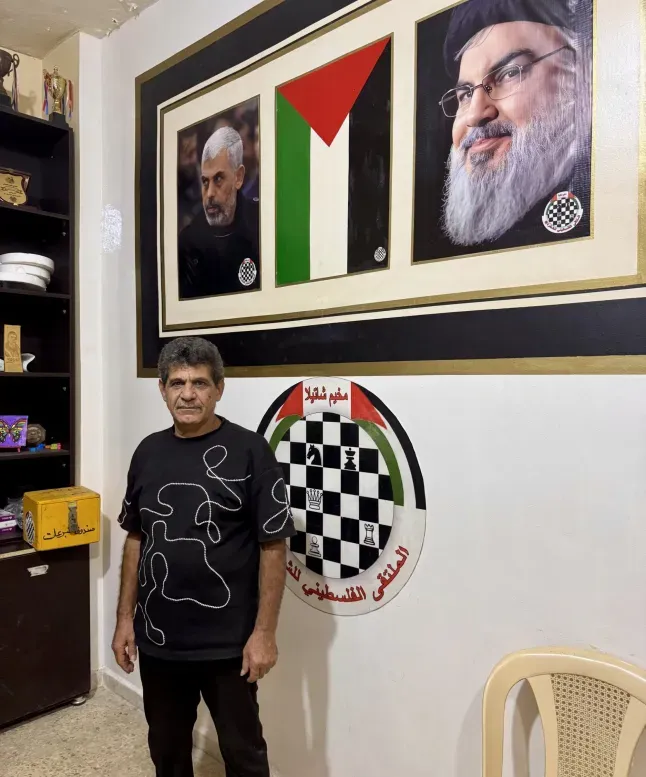
And it’s not as if Metro UK included the image as an afterthought.
The chess club’s director directly addresses the portraits (one of which Metro erroneously states is Ismail Haniyeh rather than Sinwar):
Gesturing at the two portraits on the wall – of former secretary-general of Hezbollah, Hassan Nasrallah, and former Hamas leader, Ismail Haniyeh, who were both assassinated by Israel in 2024, the director says: “We are not an NGO, or an official humanitarian organisation. This is why we can have their portraits here.”
But where is this terror-sympathizing chess club getting its funding from? None other than Christian Aid, a major UK charity, which “provided microgrants to 59 community groups in 2024, including the chess club in Shatila.”
In other words, Metro UK had just published a glowing endorsement of an organization that openly venerates terrorist masterminds — and inadvertently exposed a UK-registered charity’s financial link to it.
A Journalistic Cover-up
When HonestReporting contacted Metro UK about this journalistic disaster, the outlet didn’t issue a correction, a retraction, or even an editor’s note.
Instead, the story was quietly rewritten.
2/
REMOVED: The photo of terrorist leaders Sinwar and Nasrallah on the chess club wall.
— HonestReporting (@HonestReporting) October 28, 2025

The updated story no longer includes the photo of the Sinwar and Nasrallah portraits, along with the paragraph in which the chess club director proudly acknowledged his terrorist heroes.
In addition, references to Christian Aid’s support for the chess club have been removed, possibly indicating the charity is hoping to avoid a potential investigation by the UK’s Charity Commission.
But the stealth edit didn’t stop there.
Metro’s editors also tweaked language throughout the article to soften its tone.
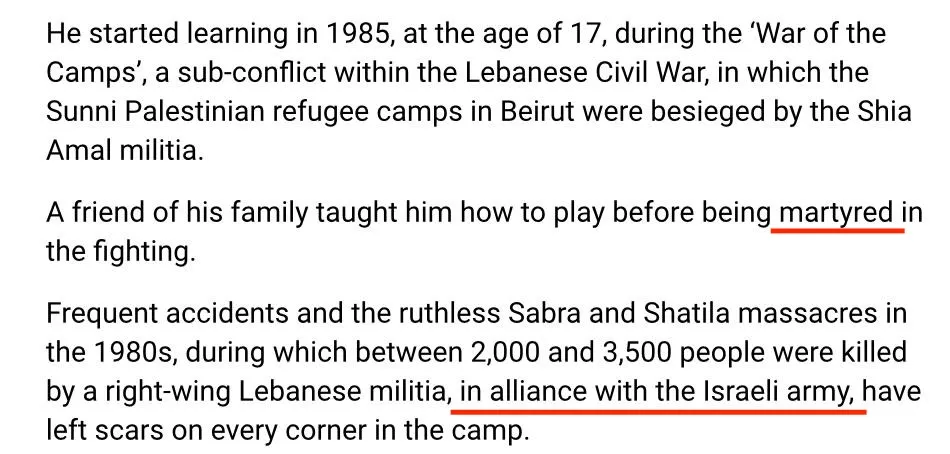
A reference to someone being “martyred” (a favorite term for extremists) now reads as “killed,” while the misleading suggestion that the IDF was directly involved in the 1982 Sabra and Shatila massacres was watered down to describe the Lebanese militia responsible as a mere Israeli ally.
What Metro Should Have Done
The responsible journalistic response would have been transparency: acknowledge the error, explain the oversight, and publish a correction.
Instead, Metro UK chose quiet deletion — a modern-day “cleanup crew” sweeping away the evidence.
The original piece could have sparked an important investigation into how extremist ideology persists in Palestinian institutions, and how UK charitable funds might inadvertently sustain it. Instead, it now serves as a case study in media complicity and moral cowardice.
Readers of the updated version will never know what was erased -– but HonestReporting preserved the receipts. You can read the archived version here.
UK charity regulators — and Christian Aid donors — might want to do the same. Something positive could still come from Metro’s blunder, even if it wasn’t what the paper intended.
The author is the Editorial Director of HonestReporting, a Jerusalem-based media watchdog with a focus on antisemitism and anti-Israel bias — where a version of this article first appeared.